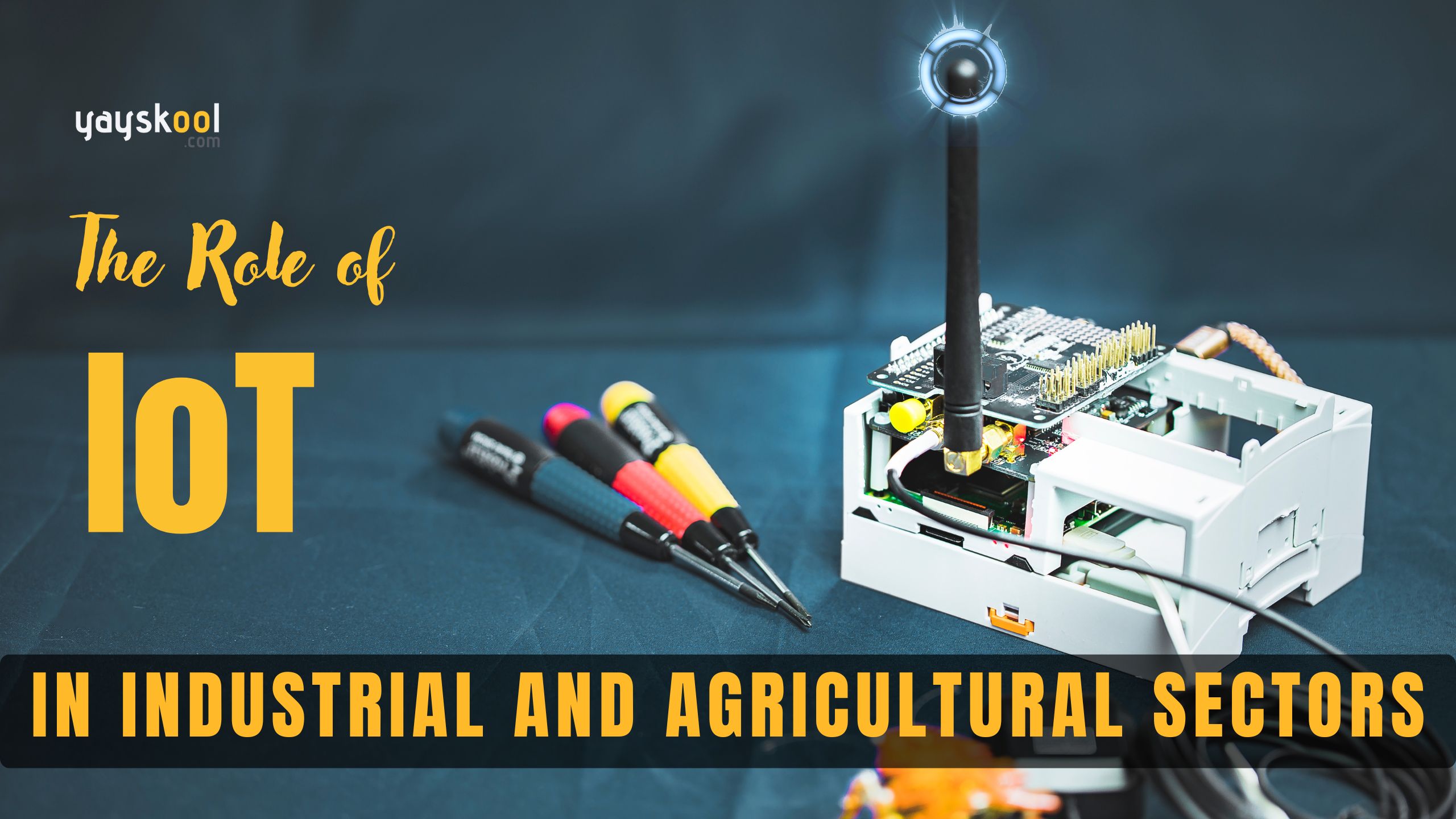
The Role of IoT in Industrial and Agricultural Sectors
The Internet of Things (IoT) is rapidly transforming industries across the globe. By connecting devices, sensors, and systems, IoT enables data-driven decision-making and automation, making operations more efficient, cost-effective, and sustainable. In this blog post, we’ll explore the crucial role IoT plays in two key sectors—industry and agriculture—and how it’s driving innovations that have far-reaching impacts.
IoT in the Industrial Sector
The industrial sector, often referred to as Industry 4.0, is undergoing a digital revolution thanks to the integration of IoT technologies. IoT solutions are enabling businesses to gather real-time data, automate processes, and optimize supply chains, leading to improved efficiency and reduced costs.
1. Predictive Maintenance
One of the most transformative applications of IoT in industry is predictive maintenance. Traditional maintenance methods, such as scheduled repairs, can be inefficient and costly, often resulting in unnecessary downtime. IoT-enabled sensors are installed on machines to monitor their performance in real-time, capturing data such as temperature, vibration, and pressure. By analyzing this data, businesses can predict when a machine is likely to fail, allowing for proactive repairs before issues escalate. This minimizes downtime, extends the lifespan of equipment, and reduces maintenance costs.
Example: A manufacturing plant might install IoT sensors on critical machinery. If the sensors detect unusual vibrations or temperature changes, they can automatically notify the maintenance team to inspect and address the issue, preventing costly failures.
2. Asset Tracking and Supply Chain Optimization
IoT has revolutionized asset tracking and supply chain management. With IoT, industrial operations can track assets in real-time, ensuring they are where they need to be when they need to be. RFID (Radio Frequency Identification) tags, GPS, and IoT sensors allow businesses to monitor the location and status of equipment, raw materials, and finished products.
By integrating IoT with big data analytics, companies can optimize their supply chains, reduce waste, and make smarter procurement decisions based on real-time data. Additionally, the ability to track products through their lifecycle can improve inventory management and reduce stockouts.
Example: In the automotive industry, IoT is used to track parts as they move through the manufacturing process, ensuring the right parts are available at each stage, reducing delays and inefficiencies.
3. Energy Management and Sustainability
IoT also plays a crucial role in energy management, helping industries monitor and reduce their energy consumption. Sensors can track energy usage across various systems, such as lighting, heating, and cooling, allowing companies to identify inefficiencies and areas where they can cut costs. Moreover, data gathered by IoT sensors can be used to implement more sustainable practices, such as automating energy-saving behaviors or switching to renewable energy sources.
Example: Smart factories use IoT to monitor their energy use and automate systems like lighting and HVAC (heating, ventilation, and air conditioning) based on occupancy and time of day, leading to lower energy consumption and costs.
IoT in the Agricultural Sector
Agriculture is another industry that has greatly benefited from the rise of IoT technologies. As the global population continues to grow, there is increasing pressure on farmers to produce more food while minimizing environmental impact. IoT has the potential to help farmers manage their crops and livestock more efficiently, improve yields, and reduce waste.
1. Precision Agriculture
IoT is a cornerstone of precision agriculture, a farming technique that uses data to optimize field-level management regarding crop farming. By deploying IoT sensors across the field, farmers can collect real-time data on soil moisture, temperature, nutrient levels, and other factors affecting plant health. This data allows farmers to make informed decisions about irrigation, fertilization, and pesticide use, ensuring that crops receive the right amount of resources at the right time.
Example: IoT-enabled soil sensors can provide farmers with precise information about soil moisture levels, enabling them to adjust irrigation schedules accordingly. This reduces water waste and ensures that crops receive optimal hydration.
2. Livestock Monitoring and Management
Farmers can also use IoT to monitor and manage their livestock more effectively. IoT-enabled collars or tags can track the location, health, and behavior of animals in real-time. These devices can alert farmers to potential health issues, such as changes in body temperature or irregular movement patterns, allowing for early intervention and reducing the risk of disease outbreaks.
Example: A dairy farm might use IoT-enabled sensors to monitor the health of cows. If an animal shows signs of illness, such as a drop in milk production or a rise in body temperature, the system can send an alert to the farmer, prompting immediate action.
3. Crop Monitoring and Automation
IoT can also be used to monitor the growth of crops and automate certain farming tasks, such as irrigation, fertilization, and pest control. IoT devices can track weather conditions, soil moisture, and plant health, providing farmers with a comprehensive view of their fields. In some cases, this data can trigger automated systems that adjust irrigation systems or activate drones for pest control, reducing labor costs and minimizing the need for chemical interventions.
Example: Smart irrigation systems equipped with IoT sensors can automatically adjust water distribution based on real-time data about soil moisture and weather conditions, ensuring crops are watered efficiently.
4. Supply Chain Transparency and Traceability
In agriculture, the supply chain often involves multiple steps, from farm to market. IoT can improve transparency and traceability within the agricultural supply chain, helping farmers track products from harvest to delivery. This ensures quality control, reduces spoilage, and improves food safety. Consumers also benefit from the ability to trace the origins of their food, which is increasingly important for food safety and sustainability.
Example: A farm might use IoT sensors to track the temperature and humidity of produce during transportation. If the conditions fall outside of the optimal range, alerts can be sent to adjust the environment or reroute the shipment.
Challenges and Future Prospects
While IoT brings tremendous benefits to both the industrial and agricultural sectors, there are challenges to overcome. The initial cost of implementing IoT systems can be high, especially for smaller operations. Additionally, issues like data security, interoperability, and the need for skilled workers to manage IoT technologies remain obstacles to broader adoption.
However, as IoT technology becomes more affordable, scalable, and accessible, its role in industry and agriculture will continue to grow. The integration of AI, machine learning, and big data analytics with IoT systems will further enhance their effectiveness, providing businesses and farmers with deeper insights and more powerful tools to optimize their operations.
Conclusion
The role of IoT in industrial and agricultural sectors is reshaping how businesses operate, making them more efficient, sustainable, and data-driven. Whether through predictive maintenance in factories or precision farming in fields, IoT is enabling smarter decisions, reducing waste, and improving productivity. As the technology continues to evolve, its impact on these sectors will only become more profound, helping industries meet the demands of a rapidly changing world.
What do you think about the potential of IoT in these sectors? Have you seen any specific examples of IoT making a difference in industries or agriculture?










.jpg)