Terraforming Mars: Science Fiction or Blueprint for Humanity?
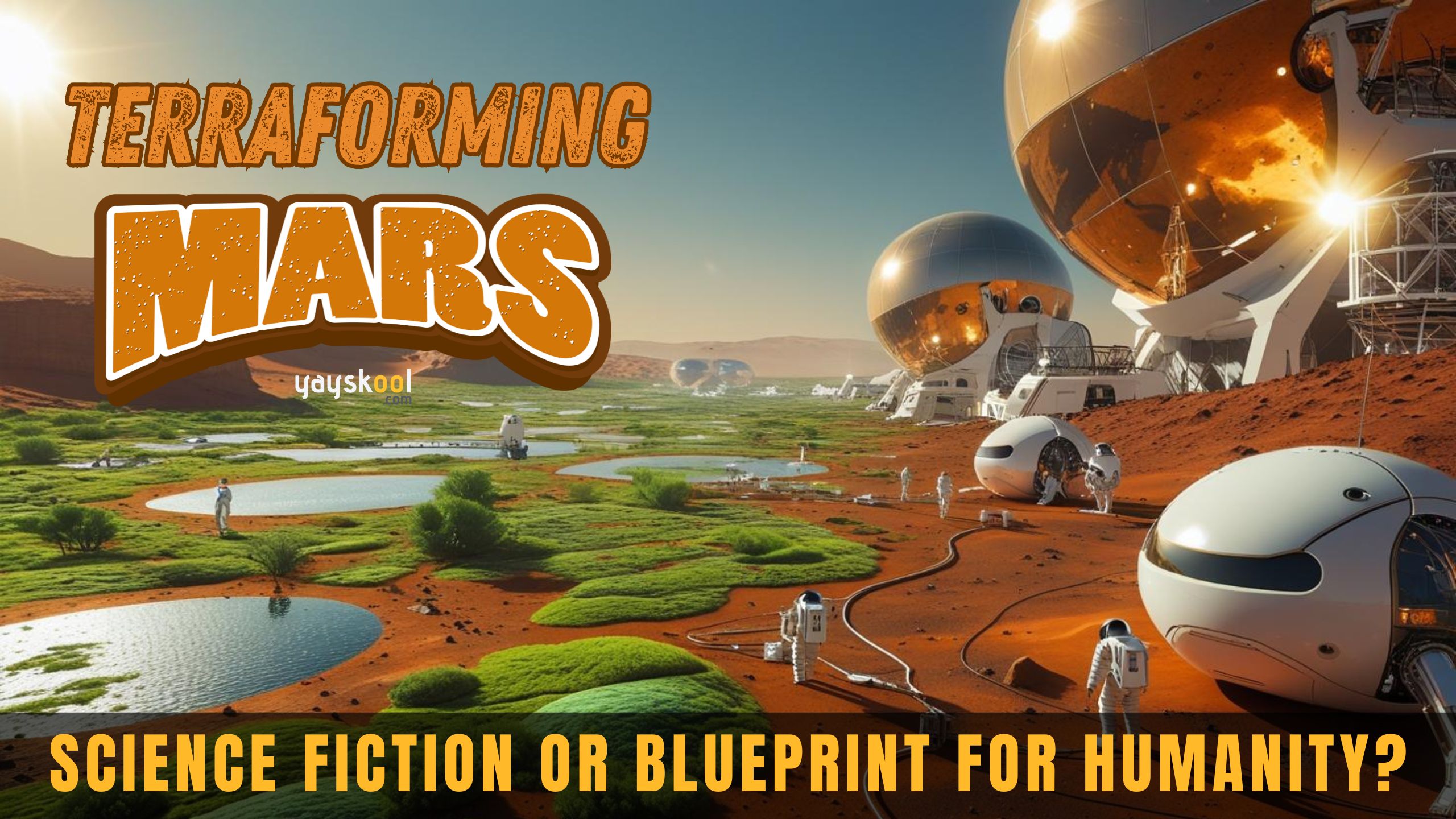
Imagine waking up on Mars, breathing Martian air, and watching twin sunsets from your dome-shaped habitat. For decades, terraforming Mars has fired the imagination of scientists, storytellers, and dreamers. But how close are we to making it real?
Why Mars?
Mars is the most Earth-like planet in our solar system. It has a 24.6-hour day, seasons, polar ice caps, and a landmass comparable to Earth’s dry land. It’s also relatively close, taking about 6–9 months to reach with current technology. This makes it a prime candidate for human colonization—and perhaps, terraforming.
What Is Terraforming?
Terraforming is the process of deliberately modifying a planet’s atmosphere, temperature, surface topography, or ecology to make it habitable for Earth-like life.
For Mars, this would mean:
- Thickening the atmosphere
- Raising the average temperature
- Creating liquid water
- Generating breathable air
How Could We Terraform Mars?
1. Greenhouse Gas Injection
- Release powerful greenhouse gases like perfluorocarbons (PFCs) to trap heat.
- Goal: Warm the planet and sublimate polar CO₂ to thicken the atmosphere.
2. Orbital Mirrors
- Place giant mirrors in orbit to focus sunlight on the surface.
- Could raise temperatures slowly over time.
3. Asteroid Bombardment
- Redirect ammonia-rich asteroids to crash into Mars, releasing gases and energy.
- Adds nitrogen and heat to the Martian atmosphere.
4. Genetically Modified Microbes
- Engineer extremophile organisms to release oxygen and alter the soil.
- Could gradually begin the formation of a breathable ecosystem.
Current Research & Technologies
- NASA and SpaceX are investing heavily in Mars missions and colonization plans.
- Elon Musk has publicly stated that he wants to send humans to Mars within the next decade and eventually terraform the planet.
- Research into self-sustaining habitats and in-situ resource utilization (ISRU) is ongoing, including using Martian soil and atmosphere for building and fuel.
The Challenges
- Thin Atmosphere – Mars has ~1% of Earth’s atmospheric pressure. It would take centuries to build it up.
- No Magnetic Field – Solar winds strip away the atmosphere. We’d need to generate artificial protection.
- Radiation – Mars receives much more cosmic radiation. Surface living would require shielding.
- Ethics & Planetary Protection – Do we have the right to alter another world? What if life already exists there?
Is It Science Fiction or a Real Plan?
Both, While large-scale terraforming remains far beyond our current capabilities, many first steps—like creating self-contained habitats, producing oxygen from Martian CO₂, and exploring ISRU—are already happening.
Terraforming is no longer just the realm of sci-fi; it’s becoming a serious long-term vision for humanity's survival and expansion.
Final Thoughts
Terraforming Mars is one of the boldest ideas in human history. It represents not just scientific ambition but a profound shift in how we see ourselves—not just as Earthlings, but as a multi-planetary species.
Whether it happens in 100 years or 500, one thing is clear: the journey to terraform Mars will transform not just another planet—but humanity itself.










.jpg)