How AI Is Shaping the 2025 Job Market
Artificial Intelligence isn't just a buzzword anymore — it's a transformative force that's reshaping industries, redefining job roles, and challenging our traditional views of work. As we step deeper into 2025, AI's impact on the job market is no longer speculative; it's happening in real-time. But contrary to popular fear, it’s not just about job loss — it’s about job evolution.
Let’s take a look at how AI is truly shaping the workforce in 2025 — the good, the bad, and the in-between.
The Jobs AI Is Replacing
AI excels at automating repetitive, rule-based tasks — and that’s where we’re seeing the biggest shifts. Roles in data entry, customer service, scheduling, and basic bookkeeping have become prime candidates for automation. With intelligent chatbots handling Tier 1 support and algorithms managing scheduling and logistics, many traditional admin roles are disappearing or downsizing.
But this isn’t just about "replacement" — it’s about redeployment.
The Jobs AI Is Creating
Surprisingly, AI isn’t just replacing roles — it's creating entirely new ones. Demand is soaring for positions that didn’t exist just a few years ago, such as:
- Prompt engineers — who fine-tune AI output
- AI ethicists — ensuring responsible use of models
- AI trainers and annotators — feeding and refining machine learning algorithms
- Automation strategists — helping businesses integrate AI into workflows
The World Economic Forum predicts that by 2025, AI could eliminate 85 million jobs — but also create 97 million new ones. That’s a net positive, but it hinges on how well we adapt.
The Jobs Being Transformed
Many roles aren’t vanishing — they’re evolving.
- Teachers now use AI to personalize learning plans.
- Lawyers streamline legal research with AI-assisted tools.
- Marketers use generative AI for content drafts, idea generation, and data analysis.
- Healthcare workers use AI to assist in diagnosis and patient care predictions.
These professionals aren't being replaced — they’re being augmented.
The Skills That Matter in 2025
To stay relevant, professionals need a hybrid skill set. Here's what’s in demand:
Hard Skills:
- Data literacy
- AI fluency (understanding how to use tools like ChatGPT, Midjourney, or Copilot)
- Basic programming (Python, SQL)
Soft Skills:
- Critical thinking
- Creativity
- Emotional intelligence
- Adaptability
Ironically, the rise of AI is making human skills even more valuable.
The Risks & Challenges
Of course, the transition isn’t without friction:
- Reskilling gaps: Not everyone has access to upskilling opportunities.
- Inequality: Workers in lower-income regions may be disproportionately affected.
- Bias in automation: AI models can unintentionally reinforce discrimination, especially in hiring or lending.
As companies adopt AI faster than regulators can keep up, ethical use is becoming a hot-button issue.
What Should We Do About It?
For individuals:
- Start learning AI tools — even free versions
- Stay curious and flexible
- Combine tech literacy with your core expertise
For employers:
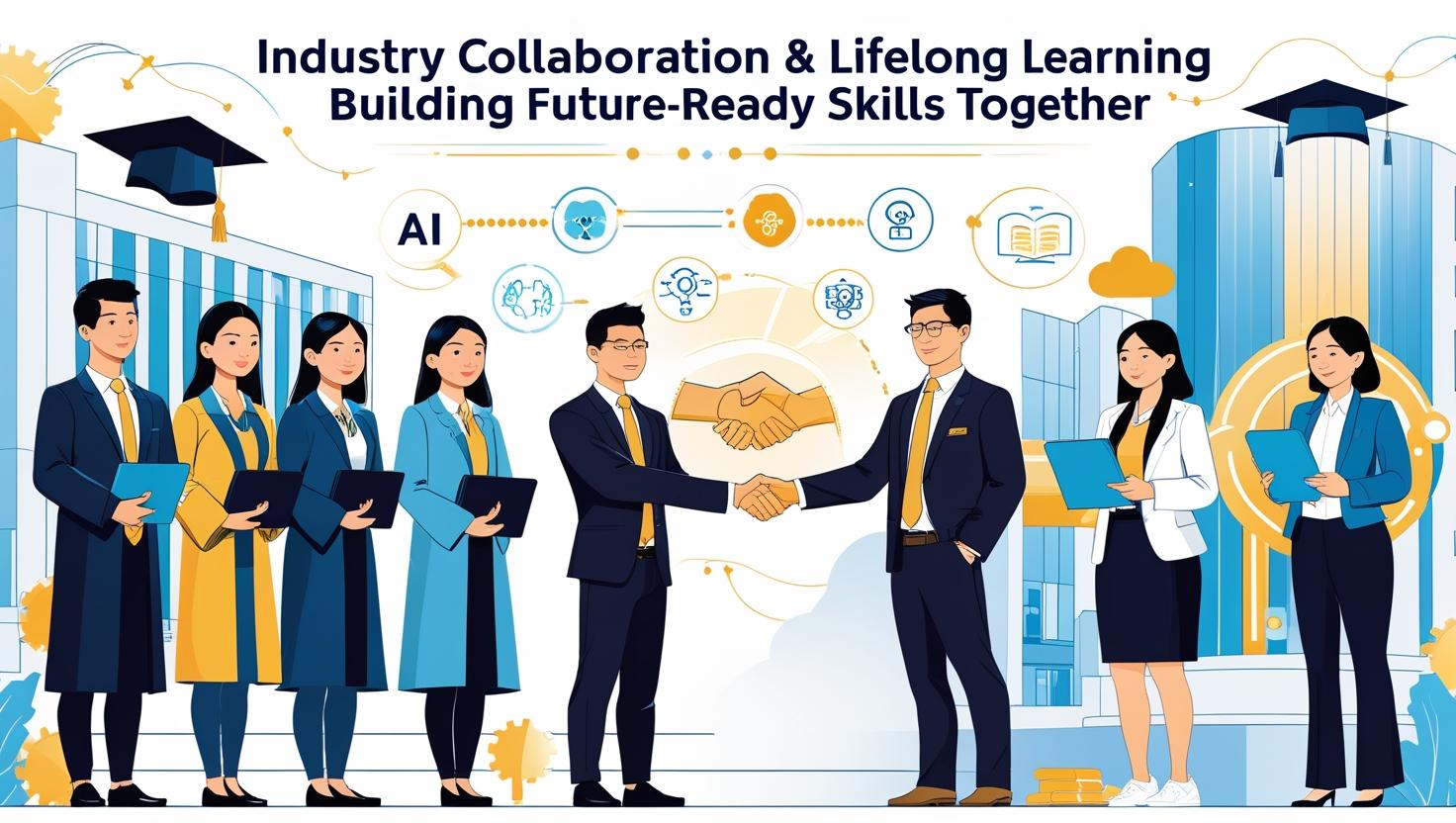
- Invest in employee reskilling
- Design human-centric automation strategies
- Build AI ethics into the company culture
Final Thoughts
AI isn’t just changing the job market — it’s reshaping the very concept of work. Those who thrive in 2025 won’t necessarily be the most technical — but the most adaptable. The future belongs to those who can work with AI, not against it.
So don’t fear the shift — prepare for it.









.jpg)